London-based interior designer Martin Brudnizki has been causing quite a stir in the design circles with his sophisticated and modern style. His latest project is popular chef Jamie Oliver’s new restaurant called Jamie’s Italian– a new chain of Oliver’s neighbourhood restaurants, the first of which has opened in Oxford, where Brudnizki effortlessly blends Tuscan-inspired rustic charm with London’s cosmopolitan style. The jewel-toned walls adorned with worn out and antique frames sit in complete contrast with the fuchsia coloured glossy chairs, giving the space a very urban edge.
And with Oliver at the helm, rest assured that the food will be as sumptuous as the décor.

Jamie’s Italian in Oxford

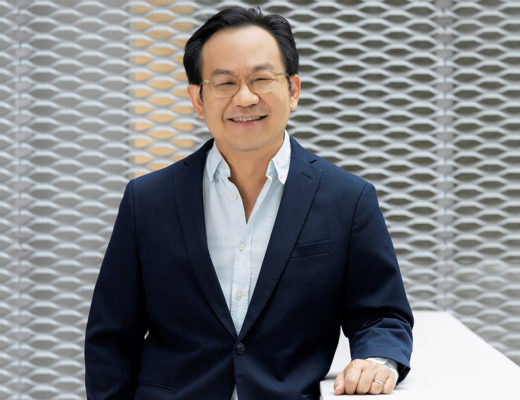
Martin Brudnizki
One of the most iconic designs of the last century, the Stool 60 by Finnish design legend Alvar Aalto turns 75 this year and remains as popular as it was then. It is also one of the most sought after furniture pieces by design enthusiasts because of its simple, minimalist design that fits in with any interior style. Even Ikea have their own version of the Stool 60 that has made its way in to our homes.


The Japan Design Foundation (JDF) will hold the International Design Competition 2008 under its basic principle of “Design for Every Being,” with its sights set on presenting visions for near-future lifestyles.
For the International Design Competition 2008, JDF has selected the theme “Earth Life” focusing on environmental awareness in our daily lives.
Open to participants internationally
Registration deadline: August 4, 2008
Entries deadline: September 5, 2008
For more information click here
Koelnmesse has commissioned the Rat für Formgebung also known as German Design Council to act as overseers and organisers of the young designers’ exhibition and prize at the International Furniture Fair, imm cologne 09, which is named [d3] contest since last year and was formerly known as Inspired by Cologne. Entries are sought from design students and young designers from around the world. Products from the interiors sector, including furniture, home accessories, lighting, flooring, wallpaper and textiles, will be accepted for inclusion in the nomination process.
Entry deadline is September 15, 2008.
Find the detailed application form here
Not much of a suspense anymore, here’s what was found inside the giant hourglass at Moscow’s Red Square– the new BMW 7series! Read more about the car here


Coco Chanel once said, “Fashion is not something that exists in dresses only. Fashion is in the sky, in the street, fashion has to do with ideas, the way we live, what is happening.” So Chanel’s creative head Karl Lagerfeld is taking it rather seriously. The latest is Lagerfeld has just inked a deal with Dubai Infinity Holdings to create “limited edition” homes (we are assuming the interiors only) on Isla Moda island, part of Nakheel’s The World Islands project in Dubai.

Lagerfeld will design 80 homes, of which 10 per cent will be “bespoke”, on the island that is being billed as the epicenter of high-end luxury fashion labels and is expected for completion in 2011.
No the suspense is not over yet! This is just the second teaser. The giant exhibit we told you about turned out to be a giant hourglass at Moscow’s Red Square, perhaps the world’s largest. The hourglass is the official countdown to something bigger in the works by BMW.


There’s something exciting happening in the historic center of the Russian capital and the mastermind behind the event is German car marquee BMW. Shrouded in mystery, there is a giant exhibit standing 12 metres tall and weighing 40 tonnes behind the curtains. Stay tuned to find out what it is! Any guesses?


Images courtesy: Pleon PR agency
The two brands couldn’t be more different. One is the arbiter of traditional European luxury headed by a dynamic American– Marc Jacobs and the other an edgy label with a cult following among fashion intelligentsia headed by an even edgier Japanese designer– Rei Kawakubo. What happens when the two team up? This is exactly what the whole fashion world is talking about from the front rows of Paris fashion week that’s currently going on to the counterfeit luxury goods peddlers.


While fashionistas are no doubt excited about the collaboration, the partnership will go as far as only six handbags in the LV monogram motif designed by Kawakubo and they will be sold at the specially-designed temporary joint store in Tokyo for three months only. Although we can’t wait to see the handbags, we are a little more than excited about Kawakubo’s much anticipated capsule collection for H&M. For obvious reasons that it’s more accessible to us as well as our wallets.
We only hope Jacobs doesn’t get Victoria Beckham to model those bags (have you seen the current LV print ads?) or perhaps she can eat two more twigs of seaweed and she might look healthier.
Just when you thought Zaha Hadid couldn’t be any busier, there comes another amazing project. Does the lady ever stop working? The Pritzker Prize winning architect has designed The Zaragoza Bridge Pavilion in Spain that is not just a bridge but also an engineering feat. The pavilion is organised around four main elements, or “pods”, that perform both as structural elements and as spatial enclosures, where each ‘pod’ corresponds to a specific exhibition space.


Expo Zaragoza originally envisaged the concept of an enclosed exhibition pavilion spanning the river. For this reason, the structure is largely visible and plays an important role in defining the Bridge Pavilion’s external envelope.
The Bridge Pavilion represents over 30 years of detailed research and examination by Zaha Hadid into bridge design. “We like projects which are structurally ambitious and I think the Bridge Pavilion illustrates the excellent symbiotic relationship we have with engineers,” says Hadid. “Our ambitions towards creating fluid, dynamic and therefore complex structures has been aided by technological innovations, and applying this knowledge to the Bridge Pavilion has been a very rewarding process.”

The hybrid nature of the Zaragoza Bridge Pavilion represented the perfect challenge for Zaha Hadid Architects. The design merges two traditionally distinct and separate building typologies: the “infrastructure” element (the bridge) and an “architectural” element (the pavilion). With the Bridge Pavilion design, Zaha Hadid Architects has challenged the conventional idea of a bridge being purely engineering.

“As the Bridge Pavilion is not one particular building typology, this really adds to the richness of the spaces inside,” explains Hadid. “We build the complexity of all our projects in relationship to the inherent complexity of the program, but then clarify the diagram as much as possible to be a logical configuration. This is evident in our design for the Bridge Pavilion. All the forces operate at the same time, so that the view of the exhibition is inherently related to nature of the visitors’ path through the Bridge Pavilion - but equally, the experience of the path shifts according to what the viewer is seeing at a given moment.”
Images courtesy: Zaha Hadid Architects/Photographer Luke Hayes.